
E-commerce didn’t kill the physical store. It killed the store that only sold things. Buying became frictionless. Tap a screen, free returns, delivered tomorrow. The physical store lost the one argument it had. If the only reason to visit is to purchase, the phone wins. Every time.
The retailers surviving this shift share a structural pattern. They’ve built spaces where a functional need creates frequency and a brand world creates meaning. The coffee shop inside the cycling store. The cereal bar inside the streetwear flagship. The bakery-café attached to the eyewear shop. These aren’t gimmicks. They’re the new retail formula.
What You’ll Learn
- Why transaction-only retail is structurally obsolete
- How the functional-anchor-plus-brand-world model works
- What Rapha, Kith, Jins Park, and Aesop reveal about the pattern
- The data connecting dwell time to conversion and revenue
- How to distinguish a genuine hybrid from a bolted-on amenity
- Why coherence determines which hybrid stores compound and which collapse
What Killed the Transaction-Only Store?
The transaction-only store operated on a simple contract: you come here, you buy something, you leave. E-commerce broke that contract by making the buying part faster, cheaper, and more convenient without requiring a visit. But the physical store didn’t die. It just lost its default reason to exist.
Eighty percent of shopping still happens in-store, according to eMarketer’s 2025 analysis. Shopping center vacancies sit at a two-decade low. The stores that are thriving aren’t winning despite e-commerce. They’re winning because e-commerce forced them to answer a harder question: why would someone come here?
The answer is never “to purchase.” Purchase is something you do on your phone while waiting for a dentist appointment. The answer, for every retailer building something durable, is closer to this: to spend time in a way that feels like it matters.
Harvard Business School’s Frank Cespedes and Pietro Satriano wrote in Harvard Business Review in April 2026 that the past seven years have been among the most tumultuous in recent retail history. But the tumult has clarified something. Physical stores are being reimagined as multi-dimensional assets: selling spaces, engagement areas, and branding vehicles operating simultaneously.
As a general rule, if the only purpose of a physical space is the transaction, that space is competing with the device in everyone’s pocket. And it’s losing.
What Is the Hybrid Retail Formula?
The hybrid retail model pairs a functional anchor with a brand world. The functional anchor solves a frequency problem. The brand world solves a meaning problem. Together they produce something neither can generate alone: structural loyalty.
The functional anchor is the utilitarian draw. Coffee, a haircut, laundry, a run, a pastry. It creates a habitual reason to return. Nobody visits a store weekly out of brand devotion. They visit because they need a coffee or their clothes are dirty.
The brand world is the context wrapped around that utility. The aesthetic language, the community rituals, the curated space, the identity layer. It gives the visit meaning beyond the errand.
This combination produces a form of loyalty that social media can imitate but rarely generate. It doesn’t depend on algorithms, ad spend, or content calendars. It compounds through physical presence and repeated experience.
The experiential retail market reached approximately $132 billion in 2025 and is projected to grow at a 15.2 percent compound annual growth rate through 2035, according to Technavio and BusinessDojo market analysis. Stores with experiential elements generate 6 to 10 percent higher revenue growth than traditional formats. Leaders in this space now attribute about 15 percent of total sales and 25 percent of profits to what BusinessDojo calls “beyond trade” activities: experiences, services, and memberships woven into the retail environment.
The most reliable hybrid model pairs a functional anchor that solves a frequency problem with a brand world that solves a meaning problem. When both run through the same identity, loyalty becomes structural.
Who’s Getting This Right — and How?
Four brands illustrate the pattern. Each has built a space where the product is no longer the entire point of the visit.
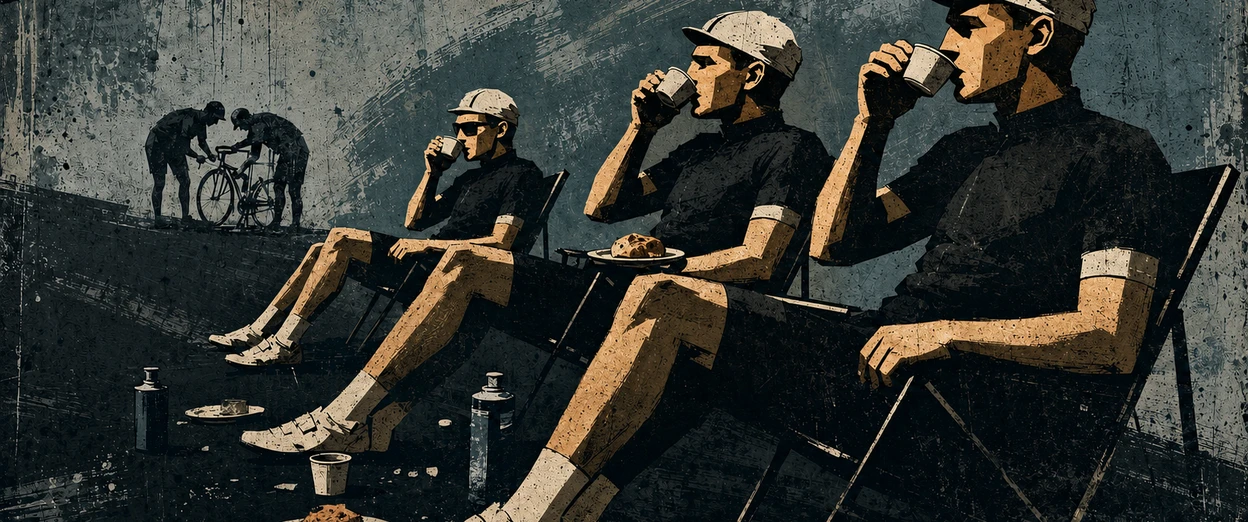
Rapha pioneered the clubhouse model in 2012. Each location combines a retail space stocked with cycling apparel, a café serving fine coffee, and a schedule of live racing screenings, group rides, and art exhibitions. The Rapha Cycling Club hosts events at approximately 20 clubhouses worldwide in cities including New York, Los Angeles, and London. You walk in after a ride for a coffee. You stay for the community. You leave wearing the kit. The coffee is the functional anchor. The ride culture is the brand world.
Kith started as a sneaker boutique in New York in 2011. In 2015, founder Ronnie Fieg opened Kith Treats, an ice cream and cereal bar born from his childhood obsession with sugary cereals his parents wouldn’t let him eat at home. There are now 17 Treats locations worldwide. Kith’s total estimated revenue is around $345 million, according to Growjo. The cereal bar provides a low-ticket entry point to the brand. A $7 bowl of cereal puts you in the same space as $350 jackets. The nostalgia and ritual extend dwell time. Kith’s latest move is a padel club in New York with Erewhon, featuring a $36,000 initiation fee. The brand isn’t selling streetwear anymore. It’s selling a world you inhabit.
Jins Park in Maebashi, Japan is an eyewear brand that built a bakery-café, playground, and garden around its glasses store. Frameweb described the approach as “less retail, more foot traffic.” The trapezoidal building, designed by Yuko Nagayama & Associates, features a copper facade that mimics the local Mount Akagi and a lawn-covered terrace where families gather whether they’re buying glasses or not. Archello reported the space was designed as a community gathering point, not a retail destination.
Aesop’s “Seven Rooms” pop-up at SKWAT Kameari Art Centre in Tokyo in February 2026 drew inspiration from Yasujirō Ozu’s 1959 film Good Morning. Fashion Headline described the installation as a continuous sequence through seven rooms: bathroom, study, living room, sunroom, kitchen, workshop, and corridor. Product packaging became architectural material. Soap bars formed walls. Weekend programming included sensory workshops, architect-led talks, and a book exchange. The product read more like a cultural institution than a beauty counter.
In each case, the functional element creates the reason to visit. The brand world makes the visit meaningful. The product becomes something you encounter inside that experience, not the experience itself.
Does Dwell Time Actually Drive Sales?
Yes, and the relationship is measurable. A 1 percent rise in dwell time produces a 1.3 percent lift in sales, according to Mapsted’s 2025 analysis. Stores offering immersive experiences see 40 percent longer visits and 30 percent higher sales compared to traditional retail setups, according to BusinessDojo.
This is the economic logic behind every coffee bar inside a clothing store and every playground attached to an eyewear shop. The functional anchor doesn’t just attract visitors. It holds them. And every additional minute spent inside a coherent brand environment is a minute where meaning accumulates and purchase intent rises.
The International Council of Shopping Centers found in 2025 that two-thirds of retail executives expect increases in foot traffic, in-store sales, and dwell time over the next year. The trajectory is clear. Time spent is the new retail metric, and the stores designed to earn it are the ones growing.
The best predictor of retail conversion in an experiential store isn’t foot traffic. It’s how long people stay.
What Separates a Gimmick from a Genuine Hybrid?
Coherence. That’s the entire answer. A gimmick bolts a coffee machine onto a sales floor. A genuine hybrid builds a space where the functional anchor and the brand world tell the same story.
The laundromat-boba shop, the bookstore-wine bar, the running store-café. Every new hybrid concept looks like a gimmick until you examine what it replaced and whether the combination is coherent. When a barbershop is owned by a skincare brand and doubles as a product showcase, the haircut is the coherence mechanism. The frequency of the functional need and the meaning of the brand experience aren’t two separate strategies stapled together. They’re one system.
Laundry and Latte in Brooklyn Heights turned a laundromat into a neighborhood gathering place by wrapping a low-status errand in the aesthetic language of specialty coffee culture. The sociological move is one of cultural bundling: you are not doing laundry. You are at a lounge that happens to have washers. This only works when the bundling is coherent. The café quality and the laundry quality and the interior design and the community programming all need to tell the same story.
The stores that feel like cultural spaces with products in them are operating from a different model of what a store is for. And the ones where the experience feels forced — where the coffee is an afterthought or the “community space” is a bench near the registers — reveal the gap between understanding the formula and executing it.
The difference between a gimmick and a genuine hybrid is coherence. If every element of the space tells the same story, the loyalty it produces is structural. If any element breaks the narrative, the whole thing collapses into decoration.
What Does It Mean to Sell Time Instead of Objects?
The old retail model sold objects. You visited, you selected, you paid, you left. The exchange was symmetric: money for product. The new model sells participation. The transaction still happens, but it’s embedded inside a larger exchange — your time for an experience that makes that time feel worthwhile.
Coffee, community, play, and cultural immersion are all forms of time made meaningful. When Kith embeds itself not just in what you wear but in how you eat, move, and socialize, it’s competing for hours, not dollars. When Jins Park builds a playground and garden around its glasses, it’s saying that the best version of this visit is one where you forget you’re in a store. When Aesop reconstructs domestic architecture from product packaging in a Tokyo railway underpass, the purchase is a souvenir of the experience. Not the other way around.
This inversion changes what loyalty means. In the transaction model, loyalty is a function of price and convenience, both things e-commerce dominates. In the participation model, loyalty is a function of how consistently a space makes your time feel well spent. That kind of loyalty doesn’t need to be bought with discounts or maintained with retargeting ads. It compounds through presence.
The question every retailer now faces is simple. Are you selling objects people can buy faster online, or are you selling time people can’t get anywhere else?
Conclusion
The store that only sold things is gone. Not because physical retail failed, but because the contract that sustained it was broken by a device in everyone’s pocket.
The retailers building something durable have answered the only question that matters: why would someone come here? The answer is always some version of time well spent. A coffee after a ride. A bowl of cereal surrounded by streetwear. A bakery-café with a playground and a garden. A film-inspired installation where soap bars form walls.
The formula is consistent across all of them. A functional anchor creates frequency. A brand world creates meaning. Coherence between the two creates structural loyalty, the kind that doesn’t depend on algorithms or ad budgets.
The stores that get this right don’t feel like stores with amenities. They feel like places where the product is evidence you were part of something. The old model sold objects. The new model sells participation. And participation, when it’s coherent, compounds.