

Transparency is a content category now. It names a page, a pledge, an annual report — something a company publishes — more often than it names a property of the company that published it. The two come apart the moment a reader checks one against the other, and readers check. Most of what a company would once have controlled is a search away, which is what raised expectations for openness.
Sprout Social’s 2018 report From Risk to Responsibility: Social Media and the Evolution of Transparency surveyed 1,000 U.S. consumers and found 86 percent saying transparency from businesses had become more important than ever. The number records an expectation, not a behavior. It tells you what an audience has started watching for. Whether the watching changes what they buy is a different question.
Take Patagonia, for example. Known for its environmental activism, the company’s transparent practices about sourcing and manufacturing have resonated with consumers who value sustainability. Similarly, Buffer’s open financials and company culture have cultivated a loyal following, demonstrating that transparency can be a powerful differentiator in a crowded market.
Honesty: The Cornerstone of Brand Trust
Honesty in advertising goes beyond avoiding false claims; it’s about creating genuine connections through truthful communication. When brands communicate authentically, they lay the foundation for trust—a vital component in fostering consumer loyalty.
Honest messaging also significantly impacts customer retention and referrals. When consumers believe a brand is trustworthy, they are more likely to return and recommend the brand to others.
Edelman’s 2019 Trust Barometer special report In Brands We Trust? put numbers to it. Consumers who trust a brand are more than twice as likely to stay loyal when a “trendy or innovative” competitor turns up: 62 percent against 29 percent. The same report found only 34 percent trust most of the brands they buy, while 81 percent call brand trust a deciding factor in a purchase. Trust is scarce, and it decides purchases.
Integrating Transparency and Honesty into Your Advertising Strategy
Deciding what to disclose is the whole problem, and the rule that sorts it is an uncomfortable one: publish the thing that costs you something. A margin, a factory address, a defect rate, or a policy you’d rather explain over the phone. Disclosure that costs nothing — the values page, the sustainability pledge, the founder’s letter — reads as marketing because it is. Nothing in it can come back on the company, so there is nothing in it to test. Integrity that exists only in the copy is a claim about a claim.
Where a disclosure sits decides whether it functions. A cost breakdown on the product page, under the price, is a disclosure; the same numbers on a transparency microsite are a brochure. The record has to meet the reader at the moment they’re weighing the claim, not three clicks away in a section built for people already convinced. Then date it and leave the earlier versions up. A factory list that changes without a history is a document a company can edit without anyone noticing. One with a history is a record.
Reviews are the disclosure a company controls least and manages most. Readers trust other customers before they trust the brand, which is why a wall of five-star quotes reads as exactly what it is. Since October 2024, the FTC’s consumer review rule has barred presenting a review display as complete when negative reviews have been held back for their sentiment, so the unfiltered set is the floor rather than the gesture. What sits above the floor is the reply. A complaint answered in public, with the fix named and dated, tells a reader something no rating average can: how the company behaves when it is wrong.
The discipline bites hardest on performance claims. Every one of them rests on test conditions, a sample size, and a date, and a number that can’t produce all three isn’t a claim — it’s a hope with a decimal point. So hold the substantiation before the claim runs, and when it can’t be produced, cut the claim rather than soften it. Softening is worse than silence: a hedged claim still asks to be believed while giving the reader nothing to check. The story a company tells about itself is built out of small refusals like that one.
For example, Everlane has built its brand around “radical transparency,” sharing detailed information about their pricing, factories, and ethical practices. This approach has not only attracted a dedicated customer base but also set a standard for the industry, proving that transparency can lead to sustained success.
What to Publish, and Where
A claim asks to be believed. A disclosure hands over something checkable. Five claims a brand makes routinely, and the artifact each one would need to become testable:
| The claim | What to publish | Where it lives | What a reader can now check |
|---|---|---|---|
| Our pricing is fair | Unit cost breakdown: materials, labor, freight, duties, margin | The product page, under the price | Whether the margin supports the word “fair” |
| We source responsibly | Factory list with city, worker count, and last audit date | A standing page, dated and kept in version history | Whether those facility names survive a search |
| Customers are happy | The full review set, one- and two-star included, with your replies attached | The product page itself, not a curated testimonial strip | Whether the complaints match the failures you admit to |
| It performs as advertised | Test conditions, sample size, and date behind every performance number | A footnote beside the claim, on the same page | Whether the number holds outside the test conditions |
| We fixed it | What broke, who it affected, what changed, what it cost | A dated post, left up permanently | Whether the same failure recurs afterward |
What Disclosure Actually Does
Disclosure doesn’t build trust. It tests whether the trust was warranted.
When a company publishes its pricing, its factory list, or the margin on a jacket, it sets a claim beside a record and invites anyone to compare the two. Agreement confirms what the audience had already started to believe. Contradiction documents the gap they suspected. In both cases the information isn’t doing the persuading. The relationship between that information and everything else the brand has said is.
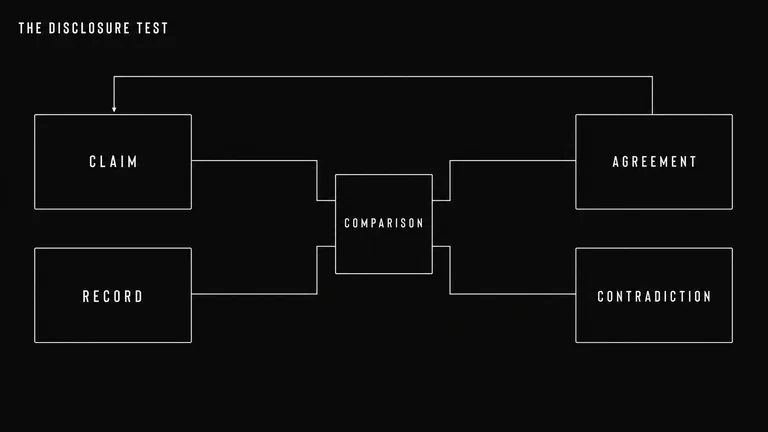
At Subverse we treat integrity as a structural requirement rather than a virtue — the argument the rest of our writing on trust builds on — and this is why. A brand signals constantly: in pricing, in packaging, in who it hires, in how a complaint gets answered, in what the founder says on someone else’s podcast. Those signals agree with each other or they don’t, and audiences register the difference well before they can articulate it. That holds when the signal is not a person: a computer-generated spokesperson still has to agree with everything else the brand emits. Transparency is what happens when you hand people the means to run that comparison themselves. It is a test the brand passes or fails, and the disclosure is only the instrument.
That changes where the risk in disclosure sits. Trust rarely breaks because a number turned out to be unflattering; it breaks because the number contradicted a story the company had been telling for years. A brand whose signals already agree has little to fear from opening the door, and little to gain from theatrical openness either.
We’ve watched this run on our own publishing. Instead of writing for reach, we stated a narrow position and published against it — systems thinking applied to brands, ethical critique of marketing, the structural mechanics of how meaning holds together or comes apart — which meant saying plainly what we don’t do and who we aren’t for. In the 12 months through June, that work drew 13,546 impressions and 67 clicks. It’s a small number, and we’d rather report it than round it.
The figures underneath it are the ones we watch. Visitors arriving from organic search engage at 41.5 percent. The ones who come back average six minutes and 15 seconds a visit. We read that as the position doing the filtering: fewer people arrive, and the ones who do already know what we are before a conversation starts. Stating the boundary cost us reach and bought us readers who don’t need to be convinced of anything on arrival.
Run this way, transparency does something slower than a lift in sentiment. It shortens the distance between what a brand says and what a reader can check, and it keeps shortening, because every disclosure that holds up makes the next claim cheaper to believe. That compounding is the loyalty the opening statistics are actually measuring.
Navigating Challenges and Debunking Misconceptions
Despite its many benefits, embracing transparency and honesty in advertising is not without its challenges. One common concern is the fear that being too transparent might erode a brand’s competitive advantage. However, transparency doesn’t mean revealing every single detail; it’s about being open about the aspects that matter most to your customers.
Another misconception is that honesty in advertising is less effective in driving sales. On the contrary, truthful advertising can enhance credibility and foster long-term loyalty, which ultimately benefits sales more sustainably than short-term gimmicks. Brands like Patagonia have shown that being transparent can coexist with effective marketing, leading to both trust and profitability.
Additionally, there is a concern that too much disclosure might overwhelm or alienate consumers. Striking the right balance is key. Transparency should enhance the consumer’s understanding and trust without sacrificing the brand’s core messaging or overwhelming the audience with unnecessary information.
Practical advice for navigating these challenges includes setting clear boundaries about what information to share and what to keep confidential. Focus on the aspects that directly impact the consumer’s experience and decision-making process. For example, a brand can transparently discuss how their products are made without divulging proprietary processes that could compromise their competitive edge.
Real-life anecdotes also highlight how brands have successfully managed these challenges. When faced with adversity, companies like Buffer have used transparency to their advantage, openly sharing their struggles and triumphs. This approach not only humanizes the brand but also builds resilience and trust, proving that honesty can strengthen rather than weaken a business.
Embracing a Transparent Future for Your Brand
Implementing transparency and honesty in your advertising strategy is not an overnight transformation; it’s a commitment to fostering genuine relationships with your customers. By prioritizing these values, you not only enhance customer loyalty and trust but also position your brand for long-term success in an increasingly discerning market.
Start by assessing your current advertising practices. Identify areas where you can incorporate more transparency and honesty, whether it’s through clearer communication, authentic storytelling, or leveraging customer feedback. Engage with your audience openly, listen to their concerns, and respond with sincerity.
Remember, transparency is not a one-time effort but an ongoing practice. Continuously seek ways to improve and maintain honesty in every aspect of your marketing strategy. This dedication will not only differentiate your brand from competitors but also create a loyal customer base that believes in and supports your mission.
As you embark on this journey, consider the long-term benefits of building a truthful and transparent brand. The trust you cultivate today will translate into loyalty and advocacy tomorrow, ensuring that your brand remains a trusted choice in the hearts and minds of consumers.
Final Thoughts: Building Trust Through Truth
Transparency and honesty in advertising are more than ethical choices—they are strategic imperatives in today’s market. By embracing these principles, businesses can forge stronger connections with their customers, fostering lasting loyalty and trust. As consumer skepticism continues to grow, the brands that stand out will be those that prioritize openness and sincerity in their messaging.
Start implementing these principles in your advertising today and watch your brand become a trusted choice!